Practical Solutions for Distributors and Veterinary Practices
For small veterinary clinics and animal hospitals, diagnostic efficiency is critical—but space, budget, and workflow limitations often make large cart-based ultrasound systems impractical.
Portable veterinary ultrasound systems provide reliable imaging, flexible mobility, and cost-effective operation without compromising diagnostic confidence.
This guide explains why portable ultrasound is ideal for small clinics, which features matter most, and how distributorscan match the right system to client needs.
Why Portable Veterinary Ultrasound Is Ideal for Small Clinics
Small clinics face unique challenges. Portable ultrasound systems are designed to meet these needs efficiently.
Limited Space, Maximum Flexibility
Most portable units weigh 20–30 kg, occupy minimal floor space, and can be easily moved between examination rooms, treatment areas, or emergency cases. Perfect for clinics without a dedicated ultrasound room or where a cart-based system (≈1 m²) is impractical.
Distributor Insight: Highlight portability and flexible deployment for clinics with limited space or shared diagnostic rooms.
Cost-Effective Diagnostic Capability
Portable systems typically cost USD 5,000–30,000, providing an affordable entry point while covering most common diagnostics in dogs and cats. Their smaller size also enables faster and cheaper air transport for urgent orders.
Faster Clinical Workflow
Immediate access to ultrasound imaging allows quick assessments without scheduling delays, improving decision-making and patient outcomes.
Many clinics also view ultrasound as a long-term investment—learn more about how veterinary ultrasound improves diagnosis, revenue, and client trust.
Key Features for Small Clinics
| Feature | Why It Matters | Distributor Insight |
|---|---|---|
| Imaging Quality | Clear 2D, stable grayscale, optional Color Doppler for abdominal, cardiac, reproductive exams | Ensure system covers most frequent clinical exams |
| Portability & Battery | Lightweight, compact, battery for full-day use | Emphasize mobility for clinics without permanent ultrasound rooms |
| Ease of Use | Intuitive interface, veterinary presets, simple measurement tools | Reduces training time for small clinic staff |
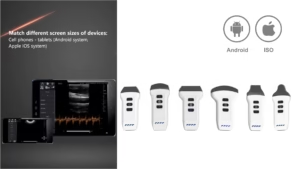
| Probe Versatility | Supports convex, linear, micro-convex probes | Match probes to clinic’s routine exams |
Common Clinical Applications
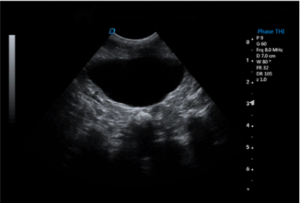
▸ Abdominal examinations (liver, kidneys, bladder, spleen)
▸ Pregnancy diagnosis & reproductive monitoring
▸ FAST & emergency ultrasound assessments
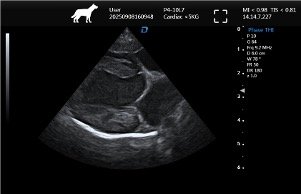
▸ Basic cardiac screening
▸ Routine follow-up & monitoring
Distributor Insight: One portable system with the right probe set can meet over 80% of routine diagnostic needs in small clinics, reducing SKU complexity and speeding up purchasing decisions.
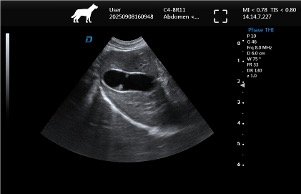
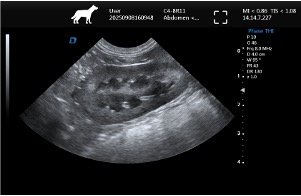
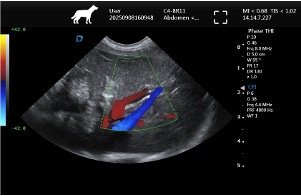
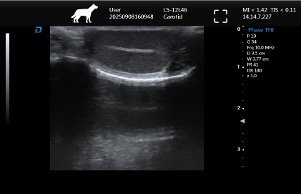
For a deeper understanding of how portable ultrasound supports daily diagnosis in real clinics, you may also find our guide on veterinary ultrasound in clinical practice helpful.
Comparison of Portable vs Cart-Based Veterinary Ultrasound Systems for Small Clinics
| Feature | Portable Ultrasound | Cart-Based Ultrasound | Distributor Insight |
|---|---|---|---|
| Primary Focus | Mobility, speed, space efficiency | Advanced parameter control, stability, reproducibility | Recommend portable for small clinics/emergencies, cart-based for high-volume daily use |
| Weight & Size | 20–30 kg, minimal floor space | >100 kg, requires ~1 m² | Highlight portability for small spaces |
| Cost | USD 5,000–30,000 | Higher initial investment | Portable = cost-effective; cart-based = long-term investment |
| Setup & Workflow | Fast startup, simple presets | Full system with advanced controls | Portable = quick point-of-care; cart-based = routine diagnostics |
| Parameter Control | Simplified | Fine-tune gain, depth, focus, Doppler | Cart-based preferred for complex exams |
| Power & Stability | Battery-powered, short-term use | Stable supply, active cooling | Cart-based better for extended scans |
| Best Use Case | Limited space, emergencies, rapid assessments | Daily advanced diagnostics | Many clinics benefit from both types |
Summary: For many small clinics, portable systems meet everyday needs, while cart-based units are ideal for high-volume or advanced diagnostics. Some growing clinics adopt both for flexibility and comprehensive coverage.
How Distributors & Clinics Should Choose
→ Step 1: Define Daily Diagnostic Needs – Identify the most frequent examinations. For many small clinics, abdominal and reproductive imaging account for the majority of use.
→ Step 2: Match Probe Options to Applications – Ensure the system supports required probes with appropriate frequency ranges for small animal imaging.






→ Step 3: Evaluate Reliability and Support – Stable performance, clear documentation, and dependable after-sales service are critical, especially for distributors serving multiple clinics.
Distributor Insight: Matching system to clinic size, workflow, and probes ensures client satisfaction and long-term partnerships.
Portable Veterinary Ultrasound Solutions for Small Clinics
We provide portable veterinary ultrasound systems tailored for small animal clinics and distributors in Europe and North America.
Our focus:
- Reliable imaging performance for daily clinical use
- Lightweight, clinic-friendly designs
- Practical probe configurations for small animal diagnostics
- Consistent quality control and long-term availability
Whether expanding your veterinary portfolio as a distributor or upgrading clinic diagnostics, we offer professional guidance to match the right system to your needs.
Frequently Asked Questions
Conclusion
Portable veterinary ultrasound systems are essential for small clinics across Europe and North America. By combining mobility, affordability, and reliable imaging, they improve efficiency while maintaining high diagnostic standards.
Distributor Takeaway: Focus on clinical practicality, reliability, and long-term value. Understanding client needs ensures optimal recommendations and long-term partnerships.
📩 Contact us to discuss model selection, probe configuration, and distributor cooperation for small clinic markets.