Showing the single result
Veterinary centrifuges support routine sample preparation for in-house diagnostics, including PCV testing, serum and plasma separation, urine sediment preparation and other laboratory workflows. Explore a compact benchtop solution designed for small animal clinics, veterinary practices and laboratory environments.
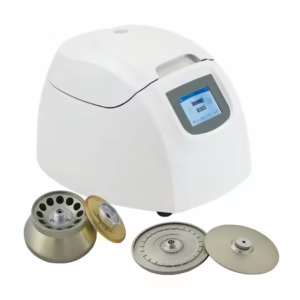
A high-speed benchtop centrifuge for everyday veterinary sample processing and in-house diagnostic workflows.
A high-speed benchtop centrifuge designed for routine sample preparation in small animal veterinary practices, supporting PCV testing, serum and plasma separation, urine sample processing and other everyday diagnostic applications.
Centrifugation can support several routine diagnostic workflows within veterinary practices. The appropriate rotor configuration depends on the type and volume of samples being processed.
PCV & Haematocrit Testing
A capillary rotor configuration can be used for packed cell volume and haematocrit determination in routine veterinary diagnostics.
Serum & Plasma Separation
Centrifugation helps separate serum or plasma from blood samples before further laboratory analysis.
Urine Sample Processing
Suitable rotor configurations can support urine sediment preparation as part of routine small animal diagnostic workflows.
Routine Sample Preparation
Interchangeable rotor configurations allow the centrifuge to support different tube sizes and sample preparation requirements within the same clinical environment.
Different sample types require different tube formats and centrifugation conditions. Interchangeable rotors allow the system to be configured around the diagnostic applications most relevant to the practice.
24-Capillary Rotor
PCV / Haematocrit
12 × 2 ml Angle Rotor
Serum, Plasma & Urine
18 × 0.5 ml Rotor
Micro Sample Processing
Additional Configurations
Different Tube Formats
The right centrifuge depends less on maximum speed alone and more on the samples, tube formats and diagnostic procedures it needs to support.
Sample Type
Start with the samples you process most often, such as blood, serum, plasma or urine, and make sure the centrifuge supports the relevant preparation workflow.
Rotor Configuration
Check the available rotor types, tube capacities and maximum speeds to ensure the configuration matches the samples and applications used in your laboratory workflow.
Speed & RCF
Maximum rpm is only part of the specification. Consider the available relative centrifugal force (RCF) and whether the centrifuge can provide the conditions required for your routine applications.
Workflow & Workspace
For in-house veterinary diagnostics, consider the available bench space, operating interface, noise level and how easily the centrifuge can fit into the clinic’s daily laboratory workflow.
A veterinary centrifuge can be positioned as part of an in-house diagnostic setup for small animal clinics, practices and veterinary hospitals. The combination of multiple rotor configurations and routine sample preparation capabilities makes it relevant to customers looking to bring common laboratory procedures closer to the point of care.
Tell us what samples you process, which applications you need to support and what rotor configuration you are looking for, and we’ll help you identify a suitable solution.