Showing the single result
Veterinary patient monitors help clinical teams continuously observe vital signs during anaesthesia, surgery, recovery and other patient care situations. Explore monitoring solutions with configurable parameters for different veterinary workflows and clinical requirements.
A modular monitoring platform designed to cover different levels of veterinary patient monitoring.
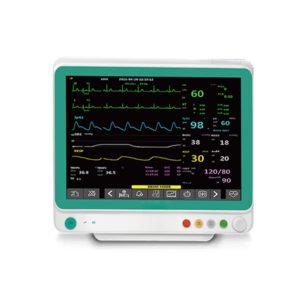
A modular veterinary patient monitor with dedicated veterinary algorithms for ECG, SpO₂, NIBP and capnography, supporting continuous monitoring during anaesthesia, surgery and patient recovery.
The monitor can be configured around the level of monitoring required for different veterinary procedures. Standard parameters cover routine vital-sign monitoring, while optional modules extend the system for more advanced clinical applications.
ECG & Heart Rate
ECG monitoring supports observation of cardiac activity and heart rate during anaesthesia, surgery and patient care. The system supports 3-lead or 5-lead ECG, with optional 12-lead ECG.
SpO₂ & Pulse Rate
SpO₂ and pulse rate monitoring provide continuous information on oxygen saturation and pulse during procedures and recovery.
Non-Invasive Blood Pressure
NIBP monitoring provides non-invasive blood pressure measurements for routine patient observation during anaesthesia and clinical procedures.
Respiration & Temperature
RESP and temperature monitoring add further information for ongoing observation before, during and after veterinary procedures.
Optional Advanced Parameters
Depending on configuration, the system can also support invasive blood pressure, end-tidal CO₂ and cardiac output, allowing the monitoring setup to be matched to more demanding clinical requirements.
Patient monitoring requirements can vary considerably between routine practice, anaesthesia and more advanced veterinary procedures. The modular configuration allows the monitor to support different clinical situations.
Anaesthesia Monitoring
Continuous monitoring of vital signs helps veterinary teams observe patients throughout anaesthesia and identify changes that may require attention.
Veterinary Surgery
Multi-parameter monitoring can support surgical teams by providing ongoing information on cardiovascular, respiratory and other vital signs.
Patient Recovery
Monitoring can continue during recovery to help clinical teams observe patients as they transition out of anaesthesia and back into routine care.
General Veterinary Practice
A configurable monitoring platform can also be used in general veterinary practices where different patient monitoring requirements may arise over time.
A patient monitor should match both the procedures you perform and the level of monitoring your clinical team actually needs. The most useful comparison is not simply the number of parameters, but how the system fits into your workflow.
Required Parameters
Start with the vital signs you routinely need to monitor. General practice may require a different configuration from anaesthesia, surgery or specialist procedures.
Patient & Procedure
Consider the types of patients and procedures involved. A monitor used mainly for routine anaesthesia may have different requirements from one intended for more complex or specialist cases.
Display & Usability
Screen size, touchscreen operation, alarm visibility and overall interface design can affect how easily information is accessed during busy clinical procedures.
Future Requirements
If your clinical needs may expand, a modular system with optional monitoring parameters can provide more flexibility than a fixed-configuration monitor.
Patient monitoring can be positioned around several clinical needs, from routine anaesthesia to surgical monitoring and recovery. A modular configuration also gives distributors more room to respond to different customer requirements without maintaining a separate monitor for every application.
Tell us about the procedures, patients and monitoring parameters you need, and we’ll help you work out which configuration makes sense for your practice or market.